


As part of the Emissions Reduction Roadmap, we are sharing stories from grape, wine and other wine value chain businesses about their journeys to decarbonise.
Alternative sources of packaging with lower emissions are critical to achieving the Australian grape and wine sector’s net zero target.
Orora – a manufacturer specialising in glass bottles, aluminium cans and closures – are aware of their role in helping the sector achieve its commitments and has taken a multi-faceted approach to its sustainability and emissions reduction activities.
Alternative packaging
The Emissions Reduction Roadmap calculated that manufacture of wine packaging contributed 44 per cent of the Australian grape and wine sector’s total annual carbon emissions in 2020–21. Downstream transport is another significant contributor to total emissions, and a large part of this transport is of packaged wines
Traditional heavy glass bottles were the main contributor to this at 34 per cent of the sector’s total emissions. These bottles are energy intensive to manufacture and the additional weight adds further to the emissions produced in transportation.
Light-weight bottles as well as alternative packaging including PET bottles, cans and casks are available to the sector and are increasing in use. However, there are challenges for adoption of alternatives.

One such challenge is for sparkling wine, which, due to its high-pressure requires stronger packaging.
Helping to address this issue, Orora developed a sparkling wine bottle that weighs just 580 grams – a full 100 grams lighter than its predecessor.
The reduction in bottle weight not only reduces total manufacturing emissions, but it is easier and cheaper to freight and, helps reduce transport emissions.
“We workshopped the idea of a lighter bottle with our customers and asked a series of questions to investigate how we could innovate for a better solution. We then simply reverse-engineered the bottle to achieve the desired outcome,” explains Orora Beverage’s General Manager – Procurement and Sustainability, Anoop Thakur.
Energy and recycling
Packaging solutions are not the only area that Orora has sought solutions to reduce its emissions and waste.
Orora is a large-scale recycler and the company works closely with its customers to create closed loop recycling systems.
In 2022, Orora commissioned a $25 million state-of-the-art advanced glass beneficiation plant at its site in Gawler, South Australia. The beneficiation plant increases the amount of recyclable glass used in the manufacturing process.
The process of beneficiation involves removing impurities from used, broken glass through crushing, cleaning and sorting to deliver crushed contaminant-free glass (also known as cullet) ready for manufacture into new products. The plant uses optical technology for this process, sorting post-consumer recycled glass by colour and separating the glass from contaminants to provide a clean stream into the company’s furnaces.
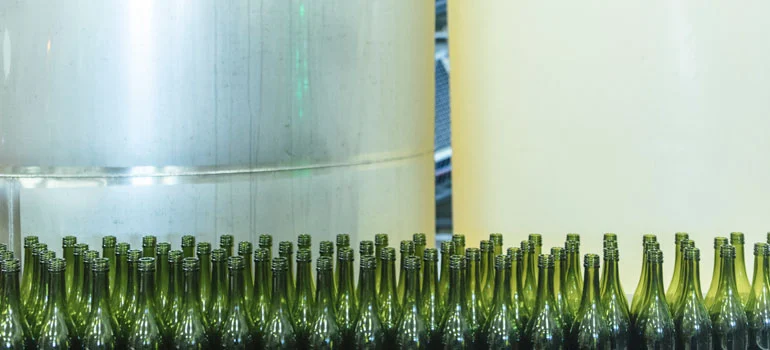
Glass is an energy intensive product to produce and Orora uses renewable energy to power its operations, with the equivalent of 80 per cent of its total electricity needs in Australia covered by long-term wind generated power purchase agreements. And the company’s long running resource efficiency program continues to help identify energy efficiencies for its operations.
The beneficiation plant, along with Orora’s plan to build Australia’s first oxy-fuelled furnace for glass container manufacturing, will enable the company to reduce the amount of energy, Co2 emissions and virgin materials used to manufacture glass, as well as diverting waste away from landfill.
“Upgrading our G3 furnace Oxy-fired furnace technology is expected to reduce the furnace natural gas consumption by more than 20 per cent, directly translating to substantial greenhouse gas emissions reduction,” said Anoop.
Net zero by 2050
Orora’s combined sustainability initiatives has enabled the company to make good progress toward its goals of achieving net zero greenhouse gas emissions by 2050.
In the interim, it is aiming to achieve a 40 per cent reduction in greenhouse gas emissions by 2035 and 60 per cent recycled content for glass beverage containers by 2025.
“With the collaboration of industry and support of governments, we are committed to continually improving recycling outcomes for wine, spirits and other beverage packaging,” said Anoop.
Emissions reductions opportunities
The Emissions Reduction Roadmap calculated that in 2020–21 the Australian wine sector produced 1,770,997 tonnes of carbon dioxide equivalent emissions (t CO2 -e). Amongst the emissions reduction opportunities the sector can achieve by 2030 are two considerable savings linked to the sector’s use of glass.
- By increasing the uptake of lightweight glass bottles so that by 2030 40 per cent of all bottles sold are in bottles weighing 380g or less, the sector will save 123,081 t CO2 -e from our 2021 baseline.
- For glass manufacturers to continue improving production energy efficiency or switching from gas to renewable energy sources will see the sector save 48,909 t CO2 -e from our 2021 baseline.

