


24 July 2020 - update
On 17 July 2020, Australian and New Zealand Food Ministers approved an amendment to the Australia New Zealand Food Standards Code (the Code) that requires alcoholic beverages to display a pregnancy warning label. The change will now be gazetted and included in the Code.
The approved amendment has a transition period of three years (extended from two years in the original draft) and a change to the signal words (see below). This means that alcohol producers have three years to begin using the pregnancy warning label, before it becomes mandatory for it to appear on the label.
The three components of the approved pregnancy warning label include:
- a pregnancy warning pictogram (silhouette logo)
- the signal words ‘PREGNANCY WARNING’, and
- the statement ‘Alcohol can cause lifelong harm to your baby’.
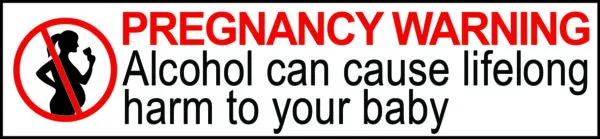
Each component has prescribed colour requirements and the label must be contained within a border, as depicted above. The size of each component is prescribed and depends on package volume.
The pregnancy warning label must appear on individual inner packages (e.g. an individual bottle of wine) and if there are multiple layers of packaging (e.g. a single bottle presentation box, or a carton of six bottles for retail sale), the pregnancy warning label must also appear on the outer package.
Downloadable versions of the warning label will be made available on the FSANZ website at gazettal.
For reference, our original article remains below. Wine Australia’s domestic labelling page will be updated with additional information once the change has been gazetted. Further information can be found on the FSANZ website here.
31 July 2020
Downloadable versions of the warning label are now available to download from the FSANZ website here: www.foodstandards.gov.au/industry/labelling/Pages/pregnancy-warning-labels-downloadable-files.aspx
27 February 2020 - our previous article about the draft amendment
Food Standards Australia and New Zealand (FSANZ) have approved a draft amendment to the Australia New Zealand Food Standards Code (the Code) to require a pregnancy warning label on packaged alcoholic beverages sold in Australia and New Zealand.
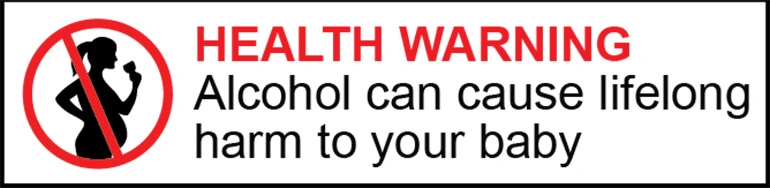
The warning label incorporates the following pictogram and wording. There are colour and sizing requirements given in the draft:
Food Ministers have 60 days following notification date (17 February 2020) to decide whether to request a review of the draft. If no review is requested, the amendment will be gazetted and become law.
The draft variation has two transitional arrangements. First, there is a general transitional arrangement (commencing when the amendment becomes law) allowing a two-year period where products may be sold with or without a pregnancy warning label. Second, there is a specific transitional arrangement where products packaged and labelled before the end of the transition period may be sold without having to display a pregnancy warning label.
Producers should be aware that this change is in the pipeline. However, until gazettal the exact requirements may change. The approval report and further information can be found on the FSANZ website here.


