


One of the biggest frustrations for growers after the devastating 2019 Cudlee Creek bushfire in the Adelaide Hills was not knowing exactly what action to take – and when.
The fire had swept through the heart of the region at the start of the summer season – much earlier than previous bushfires – and because of that, there was very little scientific information available to growers on how best to manage their vineyards to recover from fire damage.
“A public meeting was held the week after the fire and there was not a lot of information that could be put forward for growers to act. It was quite frustrating and created anxiety; we just didn’t have solutions for growers and couldn't definitively provide them with advice,” recalls Colin Hinze, a viticulture and agribusiness consultant for Pinion Advisory, who has been heavily involved in bushfire recovery efforts.
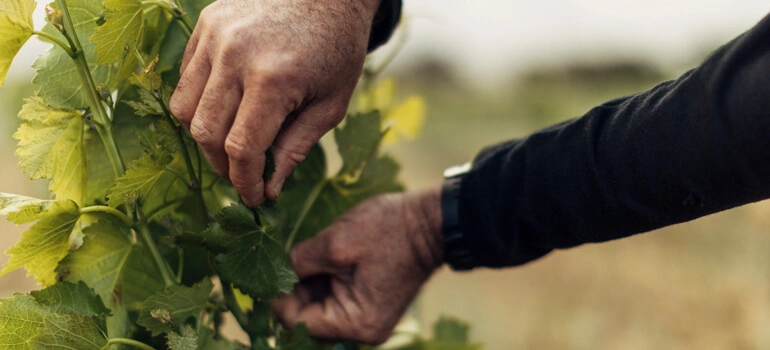
It was that lack of knowledge that motivated Colin and Richard Hamilton from Hamilton Viticulture to establish some trial work – funded through the Department of Primary Industries and Regions South Australia (PIRSA) and Wine Australia – to provide advice on the best recovery methods for vineyards directly damaged by fire.
Two years down the track, growers now have a firmer picture of what action to take in the hours, days and months following a bushfire.
Two types of demonstration trials were established following the fires to provide data to determine the optimal time to begin vine recovery (immediately after the fire or once dormant) and the best method for winter pruning (spur, cane or trunk renewal 1 ) for recovering vineyards.
Two options for trunk renewal were compared: trunk renewal in summer (Year 0) within 2–3 weeks of the fire, where damage was assessed as being moderate to severe; and trunk renewal at dormancy (Year 1), providing the advantage of assessing the nature of regrowth as well as a review of the advantages of trunk renewal (as used in management of grapevine trunk disease).
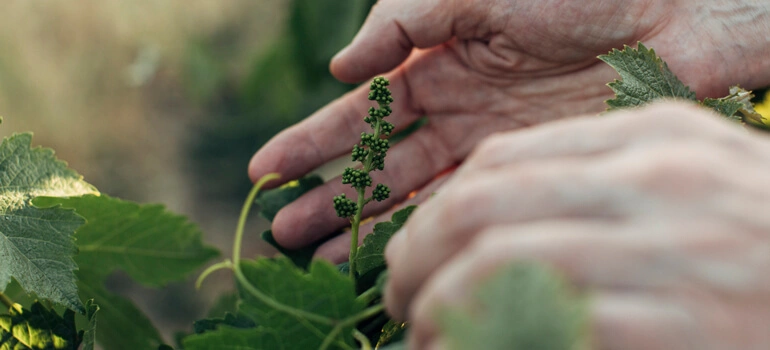
After two full growing seasons since the fire, the trial sites have given Richard and Colin some valuable insights.
The most important finding is that there is no advantage in acting immediately after a fire, compared to waiting until winter to undertake the trunk renewal process.
“Neither treatment produced grapes in the first year of trial. And in the second year of growth, there was equivalent grape production from both the early and the winter trunk renewal treatments. Given that there was no yield advantage by working early, it may be beneficial for growers to wait and to evaluate their property before acting on trunk renewal after a fire,” said Colin.
Richard said getting irrigation re-instated was the first step growers should take. “This will help vines recover as quickly as possible and to re-establish their growth patterns.”
The second important step was to leave all fresh growth.
“Once irrigation has been restored, let the vines grow to their capacity. By not removing any shoots and letting them keep growing, you maximise the opportunity for vines to store carbohydrates reserves for growing the following season,” Richard said.
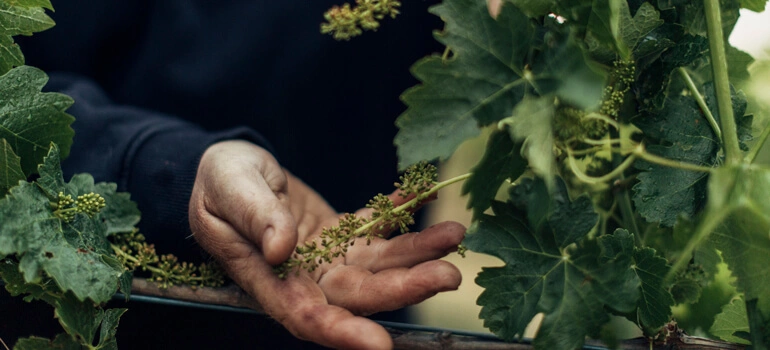
What should I do after a fire?
Richard and Colin’s advice to growers after a fire event is to:
- Reinstate irrigation as soon as possible
- Wait. Observe vine regrowth after the fire
- Wait. Review long-term plans and other production issues (e.g., block financial returns, varietal desirability, Eutypa infection, etc.
- Wait. Don’t remove any regrowth, let the vines maximise carbohydrate storage as they enter dormancy.
The work will continue for a third season, to allow collection of data from the recovery trials across vintage 2023. A realistic range of costs associated with commercial scale fire recovery activities will also be determined.
Colin and Richard’s findings were presented on a poster at the recent Australian Wine Industry Technical Conference and won the Industry Impact Award. It will also be the subject of an ASVO webinar planned for mid-October, ahead of the next fire season.
1. Trunk renewal is the process of cutting through the existing vine truck, typically 30cm above ground, removing the old trunk and cordon material from the vineyard, and training a new water shoot to re-establish the vine structure

